ICT
in Education


Introduction
The recent century has been
characterized with some new and outstanding technologies impacting human life, the most important of them is
Information Technology. Researchers conducted in both developed and developing countries prove that the
educational authorities in these countries among their other activities have
given the priority of “ICT Literacy” through developing various educational
programs (Tapscott, 1998; Currier, 2001). In the other words, ICT learning
and utilization is one of the most concerns of educational authorities around
the world and for
a number of years there has been evidence that a training and development area,
which may be labeled information literacy is being formed (Edwards, et al.,
2006).
ICT originally is applied to
serve as a means of improving efficiency in the educational process (Jones and Knezek, 1993). Furthermore, it
has been shown that the use of ICT in education can help improve memory retention, increase motivation
and generally deepens understanding (Dede, 1998). ICT can also be used to promote collaborative
learning, including role playing, group problem solving activities and articulated
projects (Forcheri and Molfino, 2000). In the other words, ICT
learning and utilization is one of the most concerns of educational issues
around the world and for a number of years there has been evidence in the training
and development area (Edwards, et al, 2006).
The Followings are the Aims and Objectives of ICT Implementation in Education (Meenakshi, 2013):
1.
To implement the principle of life-long learning / education.
2.
To increase a variety of educational services and medium / method.
3.
To promote equal opportunities to obtain education and
information.
4.
To develop a system of collecting and disseminating educational
information.
5.
To promote technology literacy of all citizens, especially for
students.
6.
Develop distance education with national contents.
7.
To promote the culture of learning at school (development of
learning skills, expansion of optional education, open source of education, etc.)
8.
To promote the culture of learning at school (development of
learning skills, expansion of optional education, open source of education, etc.)
These are
some advantages and disavantages of adoption of e-learning in education obtained from review of literature (Perrin, Perrin, Muirhead, Betz, 2015):
1. It is flexible when issues of time
and place are taken into consideration. Every student has
the luxury of choosing the place and time that suits him/her. According to Smedley
(2010), the adoption of e-learning provides the institutions as well as their students or
learners the much flexibility of time and place of delivery or receipt of according to
learning information.
the luxury of choosing the place and time that suits him/her. According to Smedley
(2010), the adoption of e-learning provides the institutions as well as their students or
learners the much flexibility of time and place of delivery or receipt of according to
learning information.
2. E-learning enhances the efficacy of
knowledge and qualifications via ease of access to a
huge amount of information.
huge amount of information.
3. It is able to provide opportunities
for relations between learners by the use of discussion
forums. Through this, e-learning helps eliminate barriers that have the potential of
hindering participation including the fear of talking to other learners. E-learning
motivates students to interact with other, as well as exchange and respect different point
of views. E-learning eases communication and also improves the relationships that
sustain learning. Wagner et al (2008) note that e-Learning makes available extra
prospects for interactivity between students and teachers during content delivery.
forums. Through this, e-learning helps eliminate barriers that have the potential of
hindering participation including the fear of talking to other learners. E-learning
motivates students to interact with other, as well as exchange and respect different point
of views. E-learning eases communication and also improves the relationships that
sustain learning. Wagner et al (2008) note that e-Learning makes available extra
prospects for interactivity between students and teachers during content delivery.
4. E-learning is cost effective in the
sense that there is no need for the students or learners to
travel. It is also cost effective in the sense that it offers opportunities for learning for
maximum number of learners with no need for many buildings.
travel. It is also cost effective in the sense that it offers opportunities for learning for
maximum number of learners with no need for many buildings.
5. E-learning always takes into
consideration the individual learners differences. Some
learners, for instance prefer to concentrate on certain parts of the course, while others are
prepared to review the entire course.
learners, for instance prefer to concentrate on certain parts of the course, while others are
prepared to review the entire course.
6. E-learning helps compensate for
scarcities of academic staff, including instructors or
teachers as well as facilitators, lab technicians etc.
teachers as well as facilitators, lab technicians etc.
7. The use of e-Learning allows
self-pacing. For instance the asynchronous way permits
each student to study at his or her own pace and speed whether slow or quick. It therefore
increases satisfaction and decreases stress (Codone, 2001; Amer, 2007; Urdan and
Weggen, 2000; Algahtani, 2011; Marc, 2002; Klein and Ware, 2003)
each student to study at his or her own pace and speed whether slow or quick. It therefore
increases satisfaction and decreases stress (Codone, 2001; Amer, 2007; Urdan and
Weggen, 2000; Algahtani, 2011; Marc, 2002; Klein and Ware, 2003)
Disavantages:
1. E-learning as a method of
education makes the learners undergo contemplation,
remoteness, as well as lack of interaction or relation. It therefore requires a very strong
motivation and time management skills in order to reduce such effects.
remoteness, as well as lack of interaction or relation. It therefore requires a very strong
motivation and time management skills in order to reduce such effects.
2. With respect to
clarifications, explanations, and interpretations, the e-learning method may be less effective that
traditional methods of learning. The learning process is much easier face-to-face with instructors or teachers.
3. When it comes to improvement
of learner’s communication skills, e-learning may have a
negative effect. Though learners might have an excellent academic knowledge, they may
not possess the needed skills to deliver their acquired knowledge to others.
negative effect. Though learners might have an excellent academic knowledge, they may
not possess the needed skills to deliver their acquired knowledge to others.
4. Since tests and assessments
in e-learning are frequently supervised by proxy, it may be
difficult, if not impossible, to control or regulate activities such as cheating.
difficult, if not impossible, to control or regulate activities such as cheating.
5. E-learning may also be
subject to piracy, plagiarism, cheating, inadequate selection skills,
and inappropriate use of of copy and paste.
and inappropriate use of of copy and paste.
6. E-learning may negatively
impact socialization skills and limit the role of instructors as
directors of the educational process.
directors of the educational process.
7. Not all disciplines can
effectively use e-learning in education. For instance, scientific
fields that require hands-on practical experiences may be more difficult to study through
e-learning. Researchers have argued that e-learning is more appropriate in social science
and humanities than the fields such as medical science and engineering where there is the
need to develop practical skills.
fields that require hands-on practical experiences may be more difficult to study through
e-learning. Researchers have argued that e-learning is more appropriate in social science
and humanities than the fields such as medical science and engineering where there is the
need to develop practical skills.
8. E-learning may also lead to
congestion or heavy use of some websites. This may bring
about unanticipated costs both in time and money (Collins et al. 1997; Klein and Ware,
2003; Hameed et al, 2008; Almosa, 2002; Akkoyuklu & Soylu, 2006; Lewis, 2000; Scott
et al. 1999; Marc, 2002)
about unanticipated costs both in time and money (Collins et al. 1997; Klein and Ware,
2003; Hameed et al, 2008; Almosa, 2002; Akkoyuklu & Soylu, 2006; Lewis, 2000; Scott
et al. 1999; Marc, 2002)
Here are some e-learning applications for you:
- Quipper Video


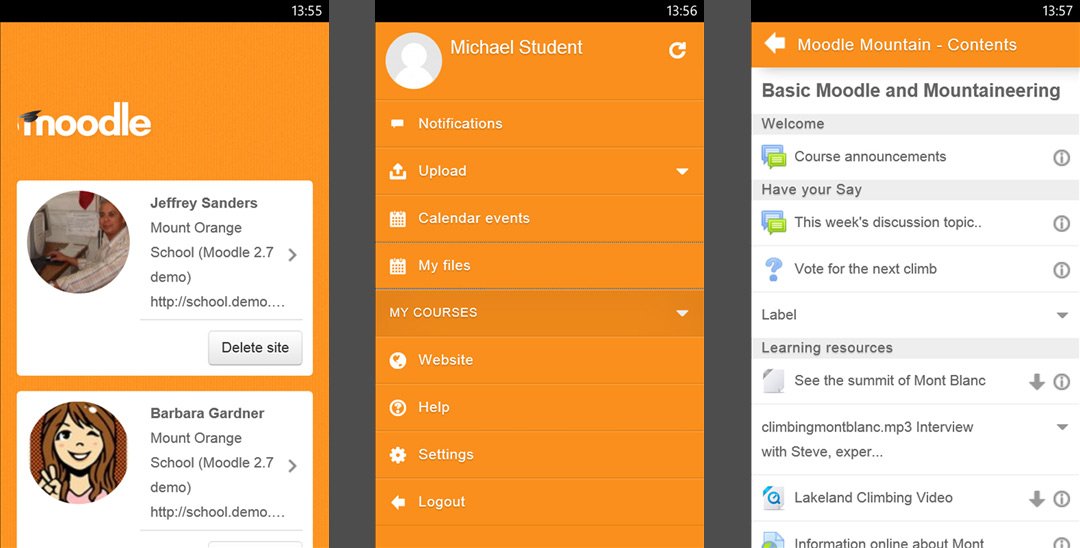
- Moodle, etc.
References
- Ghavifekr, S. & Rosdy, W.A.W. (2015). Teaching and learning with technology: Effectiveness of ict integration in schools. International Journal of Research in Education and Science, 1(2), 175-191.
- Meenakshi. (2013). Importance of ict in education. Iosr Journal of Research & Method in Education, 1(4), 03-08.
- Perrin, D, G., Perrin, E,. Muirhead, B., & Betz, M. (2015). Instructional technology and distance learning. International Journal, 12(1), 34-36.

Komentar
Posting Komentar